

Cattle farming emits methane, but it also plays a central role in agroecosystem balance.
Cattle farming emits methane, but it also plays a central role in agroecosystem balance. In Belgium, the environmental transition combines lower emissions, thriving grasslands, and decision‑making tools—thanks to feed innovations, genetic selection, and accurate on‑farm diagnostics.
Grasslands and Cattle Serving the Ecosystem
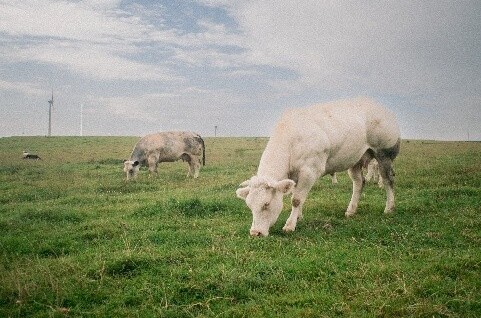
Permanent grasslands cover nearly half of Wallonia’s utilized agricultural area (UAA). They store carbon, limit erosion, filter water, and provide habitat for many species. By primarily using grass and co‑products that are inedible to humans, cattle help close nutrient cycles and produce protein for human consumption.
Enteric methane can be reduced without compromising profitability: incorporating extruded rapeseed or linseed into finishing rations can cut emissions by 21–30% at no additional cost while improving products’ omega‑3 profile. Feed thus becomes a lever for both climate and economic gains.
Genetic Innovations and On‑Farm Diagnostics
Beyond feed, genetics helps identify the most efficient animals. Using near‑infrared spectroscopy (NIR) of manure, farms can estimate methane emissions directly on‑site. The Blanc Bleu Vert project combines feed and genetics to lower system‑level footprints while maintaining competitiveness. Research is also exploring crossbreeding with dairy herds to produce bull calves that can be locally grass‑fed.
To target actions effectively, tools such as DECIDE 1(CRA‑W) and PYRAMIDE 2 (Natagriwal) assess farm life‑cycle impacts, biodiversity, and landscape structure. Presented through intuitive charts, they help farmers develop a prioritized action plan and track progress.
From Diagnosis to Concrete Practices
Observed trajectories show that forage self‑sufficiency, controlled grazing, and simple grass‑based rations improve efficiency. Where feasible, conversion to organic farming reinforces agroecological coherence: reduced inputs, hedge maintenance, later mowing, and increased biodiversity.
At the sector level, concrete indicators demonstrate progress: soil carbon sequestration, use of alternative water sources, maintenance of natural grasslands, renewable energy production, and valorization of co‑products. These practices reduce emissions while enhancing grassland fertility and biodiversity.
Testing a DECIDE/PYRAMIDE assessment and implementing a prioritized action plan are key to moving from theory to measurable results in the field.
Campaign co‑financed by the European Union.
1 https://www.decide.cra.wallonie.be/fr
2 https://www.bd.natagriwal.be/pyramide